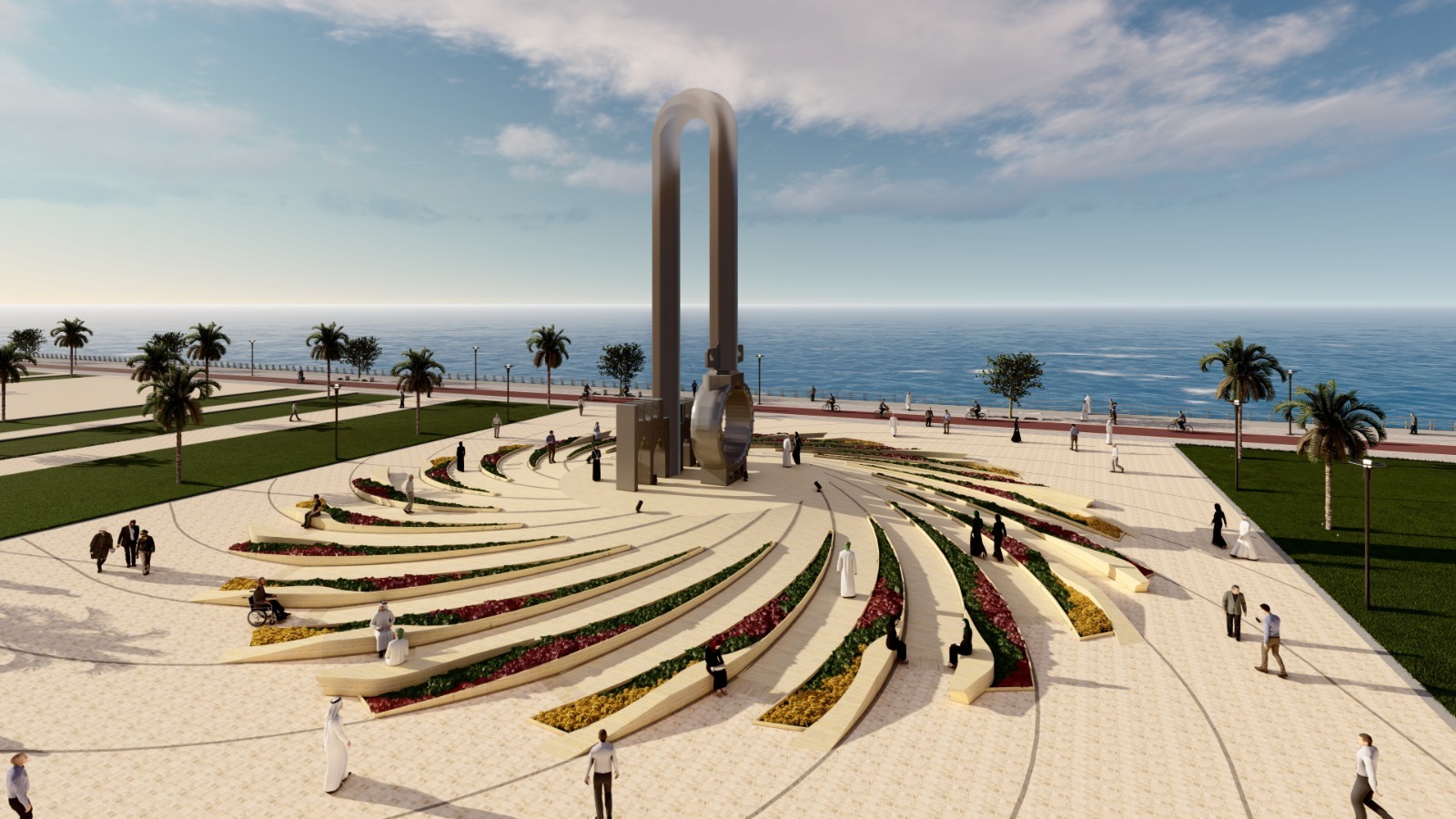
Key of the Earth Project Proposition
Project Vision
Key of the Earth rises from the shoreline as a monumental stainless‑steel key, a symbol of generosity, hospitality, knowledge and continuity. More than an object, it anchors a circular sitting & gathering place in local limestone, inviting people to meet, converse and celebrate. The design makes the waterfront a threshold between land & sea, tradition & innovation; iconic yet inclusive, symbolic yet practical.
Team:
Indrit Hamiti- Architect
Alfred Marashi- Sculptor
Design Concept
The universal key is voiced through Saudi heritage. At the Gulf’s edge, it becomes a threshold that opens possibility and safeguards knowledge. The plaza descends around the sculpture, echoing the rhythm of the souk, the intimacy of the majlis, and the openness of the forum— forming a civic heart at the water.
By day, polished steel reflects sky and horizon; by night, discreet LEDs turn the key into a luminous beacon, supporting gatherings, performances and storytelling.

Site Response & Public Impact
At Tharwa Sea Front, urban life meets the Gulf. The project creates a new reference visible from afar while shaping a human‑scale place to sit, walk and gather. It reframes the act of looking outward; toward sea and horizon, tying visitors to cycles of tide, light and sky, and marking Al‑Khobar as a gateway on the Gulf.

Materials & Sustainability
- Marine‑grade stainless steel sculpture: durable against salt, humidity and wind; mirrored to engage sun, sky and sea.
- Local limestone terraces and seating: authentic, tactile and climate‑appropriate.
- Native, salt‑tolerant planting to minimize irrigation and support coastal ecology.
- Energy‑efficient LEDs with low glare and minimal light spill.
- Modular construction for efficient fabrication, transport and assembly.
Cultural & Urban Significance
Aligned with the Mujassam Watan initiative, the project unites heritage, innovation, sustainability and public engagement. It is a place to be experienced; hosting events and daily encounters, while standing as a timeless icon for Al‑Khobar and the Kingdom’s evolving cultural landscape.
Gallery